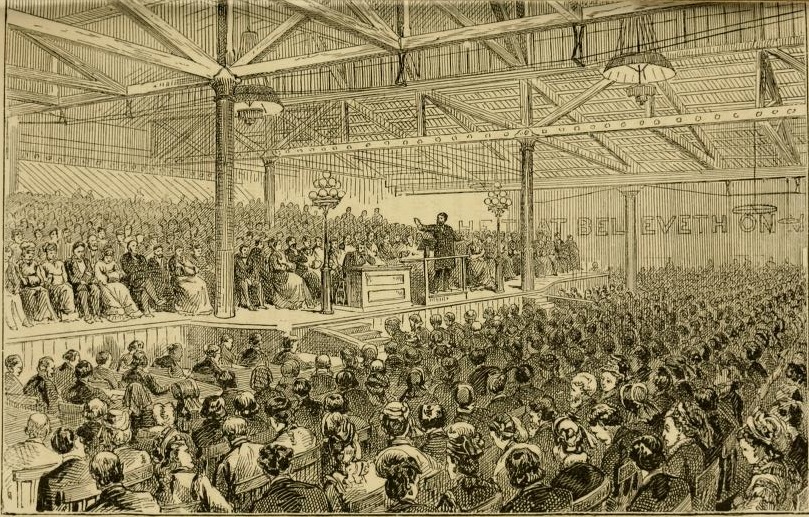
Some preachers feel trapped in their century. Dwight L. Moody doesn’t. His sermons still read like someone talking across a table—plain words, quick turns, and a steady insistence on decision. That directness is why people still search for dl moody sermons when they want something devotional without feeling buried under jargon.
Moody’s influence wasn’t built on literary polish. It was built on volume, travel, and an ability to speak to ordinary listeners—so the surviving sermon collections tend to feel usable, not ornamental.
What you’re actually getting when you read Moody
Most “Moody sermons” in print aren’t word-for-word transcripts of every moment he spoke. Many are compiled sermon texts, addresses, or edited collections assembled for readers—sometimes “authorized editions,” sometimes later editorial projects.
That matters because the Moody you meet on the page is a blend of speaker and editor. The core emphases still come through: Scripture-forward themes, urgency, and vivid illustration. Collections like Moody’s Anecdotes and Illustrations exist largely because his storytelling was part of the method.
The easiest places to find free, legitimate Moody sermon texts
If you want clean, legal downloads (and fewer sketchy popups), start with libraries that focus on public-domain texts.
-
Project Gutenberg: several Moody titles are available as free eBooks, including sermon collections like The Overcoming Life, and Other Sermons and Prevailing Prayer: What Hinders It?
-
Internet Archive: hosts scanned volumes such as multi-volume “Works of Dwight L. Moody,” which bundle sermon collections alongside devotional books and study helps.
-
CCEL (Christian Classics Ethereal Library): provides readable online editions of Moody-related works (not always sermons, but frequently sermon material, illustrations, and themed extracts).
If your keyword is “go fish card game rules pdf,” Gutenberg is the vibe. If your keyword is “go fish your way through old sermons until you find a keeper,” Internet Archive is your friend.
PDFs: what to trust, what to double-check
PDFs are convenient, but they’re also where text gets messy—bad scans, missing pages, strange formatting, or modern “reprints” with unclear sourcing.
A safe habit: when you find a PDF labeled as Moody sermons, cross-check the title against a known catalog entry (Gutenberg or Archive). For example, “Works of Dwight L. Moody” listings on Internet Archive show which volumes exist and what they contain, including Moody’s Latest Sermons.
You’ll also see stand-alone PDFs circulating for individual sermons or collections (some hosted on religious libraries). Those can be useful, but they’re best treated as “copies” unless they clearly cite an original edition.
Audio and sermon libraries: where people listen
If you prefer listening, there are sermon aggregator sites that collect audio and text resources under Moody’s name. SermonIndex, for example, maintains a page specifically for sermons by D.L. Moody and positions him as a major 19th-century evangelist whose preaching spread widely.
For text-based weekly sermon posts associated with the Moody legacy, The Moody Church publishes “D. L. Moody Weekly” entries that present sermon material tied to his preaching and themes.
Where to start: two “entry point” sermon books that don’t overwhelm
If you’re new to him, don’t start with the thickest compilation. Start with focused themes.
Prevailing Prayer: What Hinders It? is short, pointed, and structured around obstacles and clarity—easy to read in small sittings.
The Overcoming Life, and Other Sermons works as a sampler platter: multiple messages, recurring motifs, and a strong sense of his pacing on the page.
Once you’ve got a feel for his voice, collections like Moody’s Latest Sermons make more sense because you can recognize what’s “classic Moody” even through editorial shaping.
How to study Moody without turning it into a chore
Moody’s writing rewards one simple approach: read slower than you think you need to.
Try this:
-
Read one sermon out loud (his sentences are built for speech).
-
Mark repeated ideas (faith, decision, assurance, Scripture promises).
-
Compare two editions if something seems oddly phrased (Gutenberg vs. Archive scans often reveal small differences).
That’s enough. You don’t need a graduate seminar to benefit from a preacher who worked hard to be understood.
A small human detail that makes a difference
Many people first encounter Moody in casual settings: a Sunday-school library shelf, a church book table, or a “read one page a day” habit. Those settings matter because Moody’s style is built for attention spans that come and go.
If you’re reading with kids around, a quick break helps—something as simple as a go fish card game between pages can reset the room and make the next section land better. (And yes, the irony is perfect: you “go fish” for pairs; you “go fish” for one strong paragraph that sticks.)
The easiest way to find trustworthy moody sermons is to start with public-domain libraries, then work outward: Project Gutenberg for clean text, Internet Archive for scanned collections, and curated Christian libraries for themed extracts and audio. Moody’s appeal is still simple—he aimed to be understood, and the best collections preserve that.